
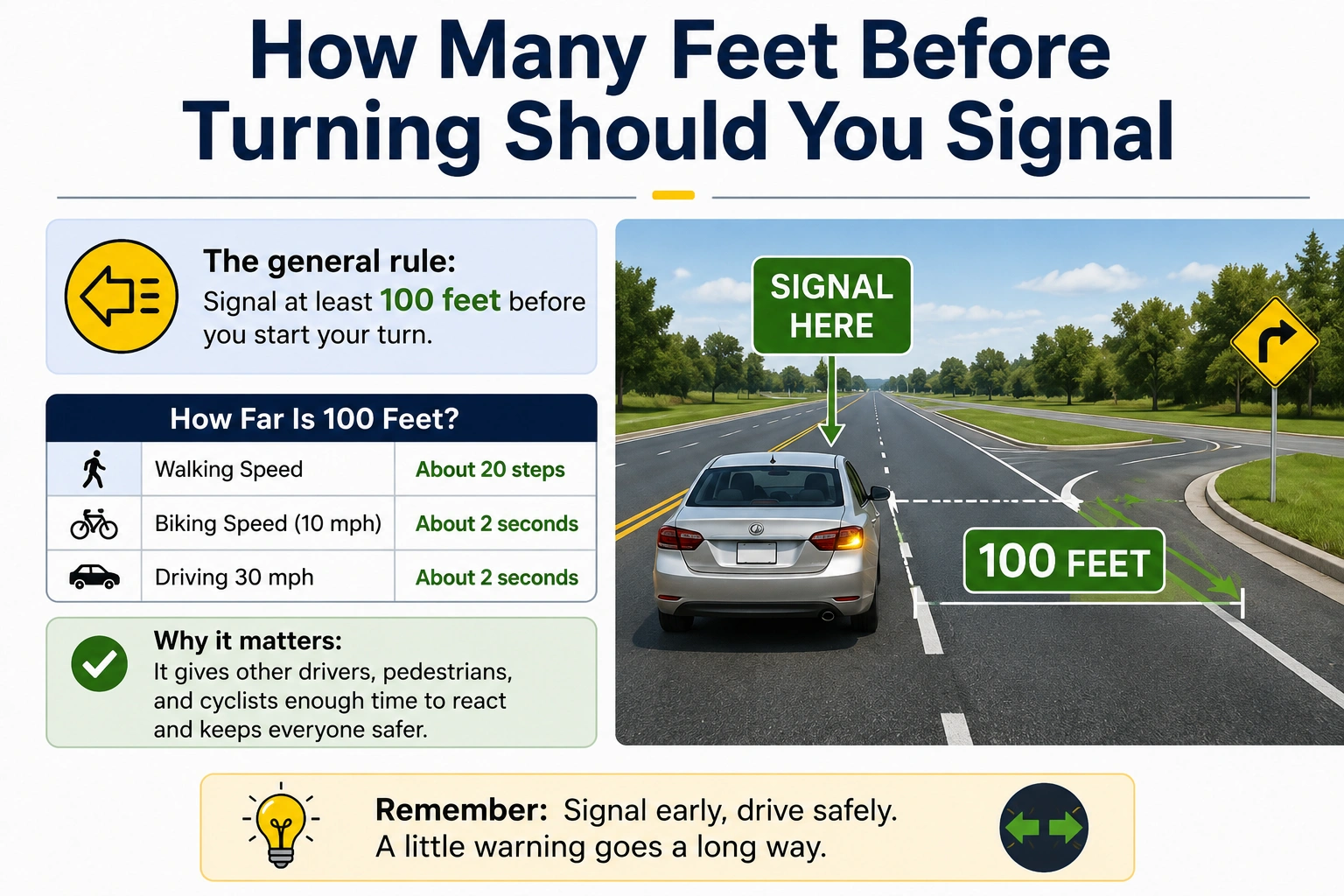
If you’re asking how many feet before turning should you signal, the standard driving rule in most states is simple:
👉 Drivers should signal at least 100 feet before turning.
Using your turn signal correctly is one of the most important parts of safe driving. It helps other drivers, cyclists, and pedestrians understand your intentions and react safely.
Turn signals reduce accidents, improve traffic flow, and are required by law in most places. Whether you are preparing for a driving test or simply refreshing your knowledge, understanding proper signaling distance is essential for responsible driving.
In this guide, you’ll learn the official turn signal distance, why it matters, common mistakes drivers make, and important safety tips for signaling correctly in different situations.
Quick Answer: Turn Signal Distance
Here’s the standard rule:
👉 Signal at least 100 feet before turning
This applies to:
- Left turns
- Right turns
- Lane changes in many situations
Why Turn Signals Matter
Turn signals communicate your intentions to other road users.
Proper signaling helps:
- Prevent accidents
- Reduce confusion
- Improve traffic safety
- Give other drivers time to react
Without signaling, sudden turns can surprise nearby drivers and increase crash risk.
Standard Rule for Signaling Before Turning
Most driving laws recommend:
👉 Use your signal continuously during the last 100 feet before the turn
This gives surrounding traffic enough warning.
For highway driving, drivers may signal even earlier because of higher speeds.
Turn Signal Rules for Different Situations
Different driving situations may require slightly different signaling habits.
Turning at Intersections
When approaching an intersection:
- Activate signal about 100 feet before turning
- Keep signal on until turn is complete
Changing Lanes
For lane changes:
- Signal before moving
- Check mirrors and blind spots
- Move only when safe
Highway Driving
At high speeds:
- Signal earlier than 100 feet when possible
- Give drivers extra reaction time
State Driving Laws and Variations
While 100 feet is the most common rule in the United States, some states may have slightly different requirements.
However, the general goal is always the same:
👉 Give other drivers enough warning before turning or changing lanes.
Drivers should always follow local traffic laws and DMV guidelines.
Common Mistakes Drivers Make
1. Signaling Too Late
Late signaling gives drivers little time to react.
2. Forgetting to Turn Off Signal
Leaving signals on can confuse other drivers.
3. Not Signaling at All
This is dangerous and often illegal.
4. Signaling While Turning Instead of Before
Signals are warnings, not announcements after the action starts.
Expert Safe Driving Tips
- ✔ Signal early and clearly
- ✔ Always check blind spots
- ✔ Use signals even on empty roads
- ✔ Avoid sudden lane changes
- ✔ Practice defensive driving habits
Good signaling habits make roads safer for everyone.
FAQs
1. How many feet before turning should you signal?
Drivers should signal at least 100 feet before turning.
2. Is signaling required by law?
Yes, in most states signaling is legally required.
3. Do you signal before changing lanes?
Yes, drivers should always signal before changing lanes.
4. Why is signaling important?
It warns other road users and helps prevent accidents.
5. Can you fail a driving test for not signaling?
Yes, improper signaling can cause driving test failure.
Conclusion
Now you understand how many feet before turning you should signal and why proper signaling is important for road safety.
To summarize:
- Signal at least 100 feet before turning
- Use signals for turns and lane changes
- Early signaling helps prevent accidents
Developing good signaling habits improves safety, reduces confusion, and helps you become a more responsible driver.
Discover More Articles
How Many Square Feet Is a 4 Bedroom House? Complete Guide
How Many Square Feet in a Single Car Garage? Complete Guide
How Many Feet Above Sea Level Is Colorado Springs? Complete Guide