

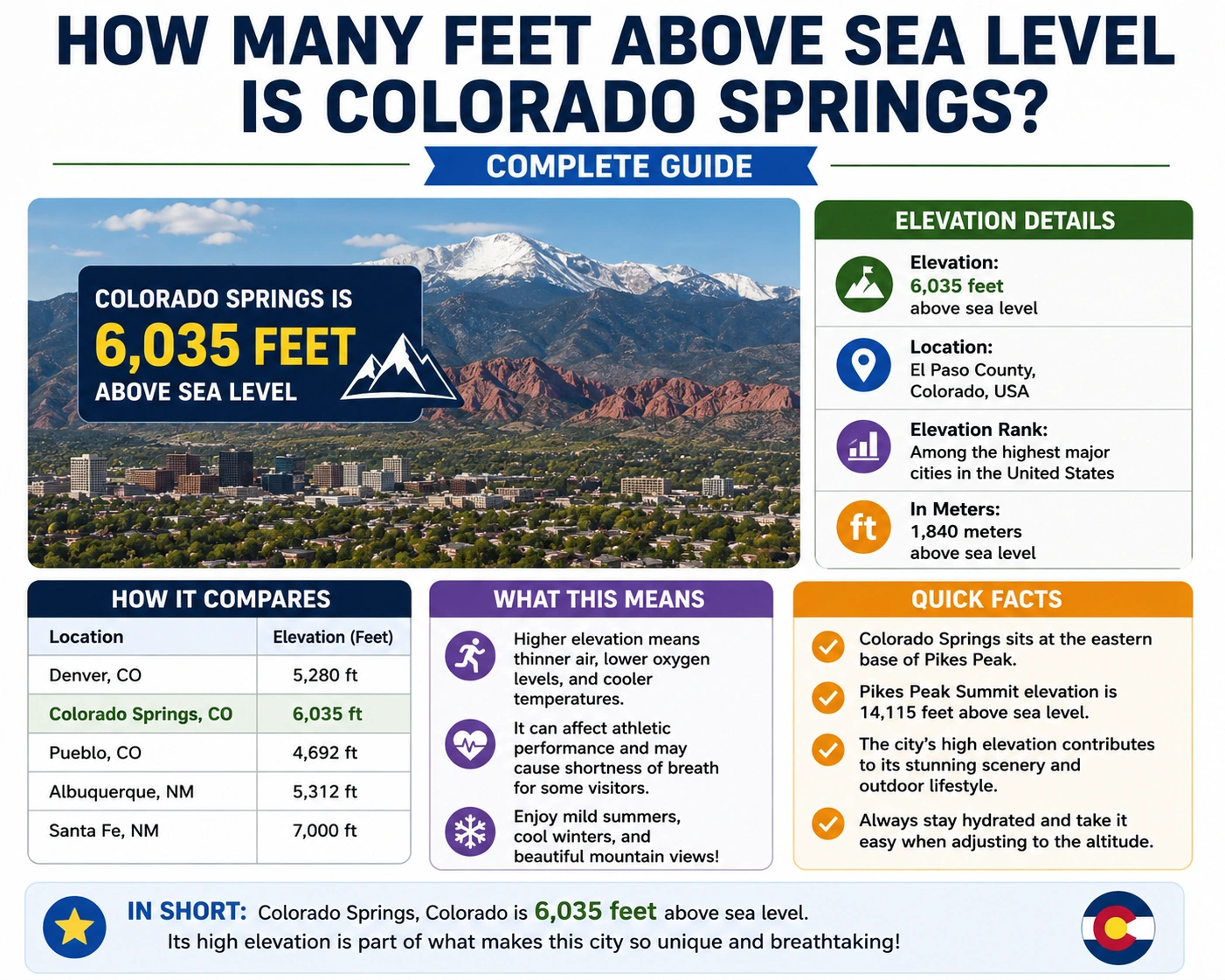
If you are wondering how many feet above sea level is Colorado Springs, the city sits at a very high elevation compared to most places in the United States.
👉 Colorado Springs is about 6,035 feet above sea level
This high elevation is one reason why Colorado Springs is famous for:
- Mountain views
- Outdoor recreation
- Cooler temperatures
- Hiking and tourism
The city is located near the Rocky Mountains, which gives it its unique geography and climate.
This guide explains Colorado Springs elevation, altitude comparisons, and how high elevation affects daily life and visitors.
Quick Answer: Colorado Springs Elevation
👉 Colorado Springs sits approximately 6,035 feet above sea level
Some areas of the city may be:
- Slightly lower
- Slightly higher
Elevation changes depending on location within the city.
Understanding Elevation and Sea Level
Elevation means:
👉 Height above sea level
Sea level is used as the standard reference point for measuring land height.
For example:
- Coastal cities are close to sea level
- Mountain cities sit much higher
Where Is Colorado Springs Located?
Colorado Springs is located in the state of Colorado near the eastern side of the Rocky Mountains.
The city is known for:
- Scenic mountain landscapes
- Outdoor activities
- High-altitude living
- Tourist attractions
Why Colorado Springs Has High Elevation
Colorado Springs sits near the base of the:
- Rocky Mountains
Mountain regions naturally have higher elevations because the land rises significantly above sea level.
Colorado itself is one of the highest states in the United States.
Elevation Formula Explained
Elevation is measured vertically from sea level:
Elevation=Height Above Sea Level
For Colorado Springs:
Colorado Springs Elevation≈6,035 feet
Colorado Springs Elevation Compared to Other Cities
| City | Approximate Elevation |
|---|---|
| Miami, Florida | 6 feet |
| Chicago, Illinois | 594 feet |
| Denver, Colorado | 5,280 feet |
| Colorado Springs | 6,035 feet |
| Leadville, Colorado | 10,152 feet |
Colorado Springs is much higher than most major U.S. cities.
Why Colorado Is Called the Mile High State
Colorado is famous for high elevations.
For example:
- Denver is called the “Mile High City” because:
1 mile=5,280 feet
Colorado Springs is even higher than Denver.
Real-Life Effects of High Altitude
Living or visiting high elevations can affect:
- Breathing
- Hydration
- Physical activity
- Weather conditions
Weather Differences
Higher elevations usually experience:
- Cooler temperatures
- More snow
- Stronger sunlight
Colorado Springs often has cooler weather than lower-elevation cities.
Physical Activity Impacts
At high elevations:
- Air contains less oxygen
Visitors may notice:
- Faster breathing
- Fatigue
- Shortness of breath
This is normal for people not used to high altitude.
Tourism and Hiking
Colorado Springs is popular for:
- Hiking
- Mountain biking
- Camping
- Scenic drives
Nearby mountain attractions offer even higher elevations.
Famous High-Elevation Attractions Nearby
Popular attractions near Colorado Springs include:
- Pikes Peak
- Garden of the Gods
- Red Rock Canyon Open Space
Some nearby mountain roads climb well above:
- 10,000 feet
Why Elevation Matters
Elevation affects:
- Climate
- Health
- Cooking times
- Athletic performance
- Air pressure
People moving to Colorado Springs often need time to adjust.
Common Altitude Symptoms
Some visitors may experience mild altitude symptoms such as:
- Headaches
- Tiredness
- Dryness
- Dizziness
These usually improve after:
- Rest
- Hydration
- Time to adjust
Tips for Visiting High-Altitude Areas
Drink Plenty of Water
High elevations can cause dehydration faster.
Avoid Overexertion Early
Take it easy during your first day or two.
Use Sunscreen
Sunlight is stronger at higher elevations.
Stay Hydrated
Proper hydration helps reduce altitude discomfort.
Elevation Compared to Sea Level Cities
Compared to coastal cities:
- Colorado Springs sits dramatically higher
For example:
- Miami is only a few feet above sea level
Colorado Springs is over:
👉 6,000 feet higher
Why Many Athletes Train in Colorado Springs
Athletes often train at higher elevations because:
- Lower oxygen levels challenge the body
This can improve endurance when returning to lower elevations.
Colorado Springs is home to several athletic training facilities.
Common Misconceptions About Elevation
Higher Elevation Does Not Mean Mountain Peak
Colorado Springs is elevated, but the city itself is not on top of a mountain.
Not Everyone Gets Altitude Sickness
Many visitors adjust without serious issues.
Elevation Changes Across the City
Some neighborhoods sit higher than others.
Quick Elevation Facts
| Fact | Measurement |
|---|---|
| Colorado Springs Elevation | ~6,035 feet |
| Denver Elevation | 5,280 feet |
| Sea Level | 0 feet |
Why People Love Colorado Springs
The city is popular because of:
- Beautiful scenery
- Outdoor recreation
- Mountain views
- Pleasant climate
- Hiking opportunities
Its elevation contributes to its unique atmosphere.
9. FAQs
1. How many feet above sea level is Colorado Springs?
Colorado Springs is approximately 6,035 feet above sea level.
2. Is Colorado Springs higher than Denver?
Yes, Colorado Springs sits higher than Denver.
3. Can high altitude affect visitors?
Yes, some people may experience mild altitude symptoms.
4. Why is Colorado Springs so high?
The city is located near the Rocky Mountains.
5. Is Colorado Springs considered high altitude?
Yes, elevations above 5,000 feet are generally considered high altitude.
10. Conclusion
So, how many feet above sea level is Colorado Springs?
👉 The city sits at approximately:
👉 6,035 feet above sea level
Its high elevation helps create:
- Cooler temperatures
- Beautiful mountain scenery
- Outdoor recreation opportunities
- Unique high-altitude living conditions
Whether you are visiting, moving, or simply learning about geography, understanding Colorado Springs elevation helps explain why the city is one of the most famous mountain destinations in the United States.
Discover More Articles
How Many Square Feet Is a 4 Bedroom House? Complete Guide