
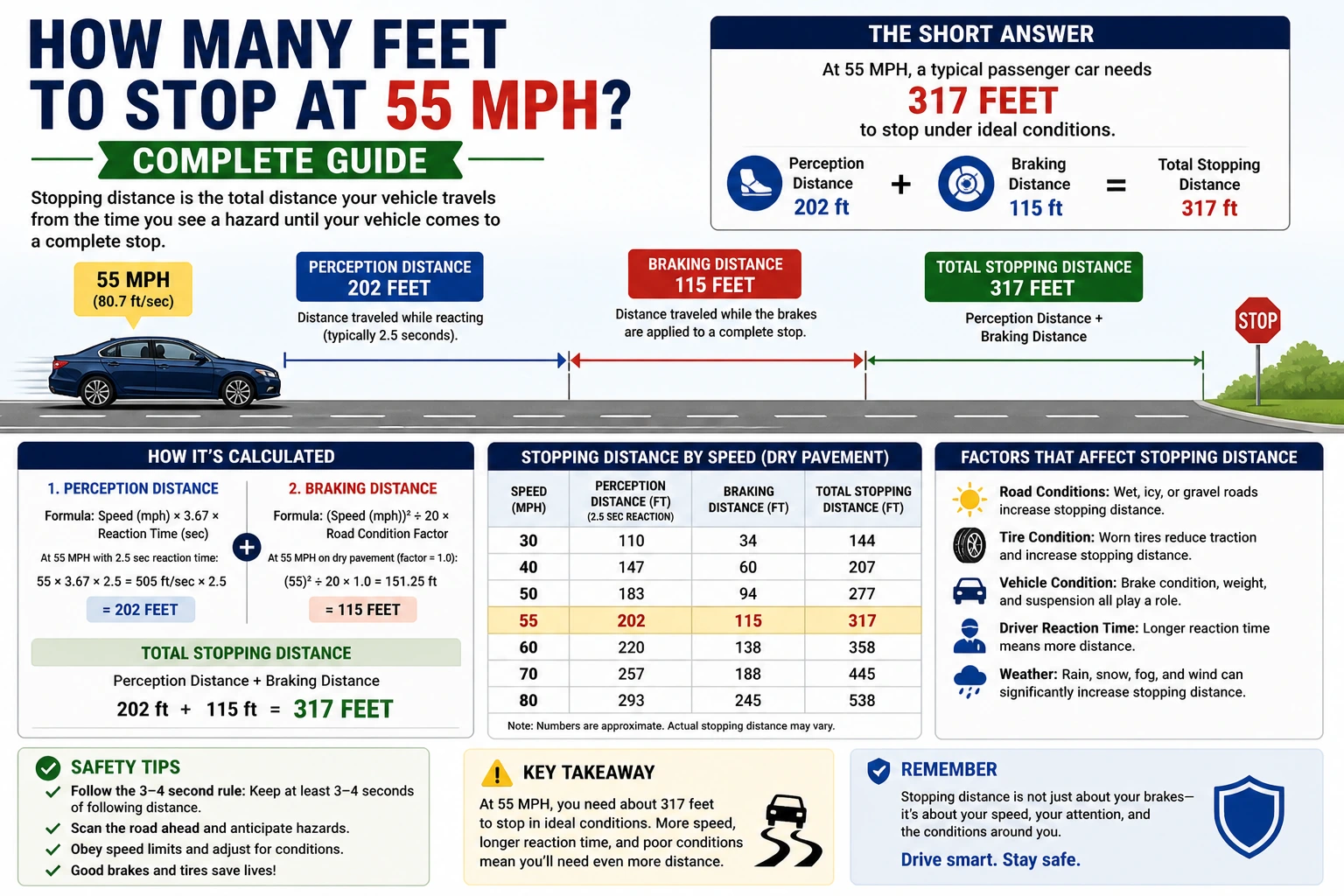
If you’ve ever wondered how many feet to stop at 55 mph, you’re asking a crucial question for safe driving.
Stopping a vehicle isn’t instant. It takes time for your brain to react and for your car to physically stop. That’s why understanding stopping distance is essential for preventing accidents.
In this guide, we’ll break down the exact distance, how it’s calculated, and what factors affect it.
Quick Answer: Stopping Distance at 55 MPH
👉 It takes about 265 to 300 feet to stop at 55 mph
This includes:
- Reaction distance
- Braking distance
What Makes Up Stopping Distance
Stopping distance has two main parts.
Reaction Distance
This is the distance your car travels while you react.
Braking Distance
This is the distance it takes for your car to stop after you press the brakes.
Reaction Distance at 55 MPH
At 55 mph, your car travels fast—even before you hit the brakes.
- Average reaction time: 1.5 seconds
- Distance traveled: ~120 feet
👉 That means you travel about 120 feet before braking even starts
Braking Distance at 55 MPH
Once you press the brakes, your car still needs distance to stop.
- Braking distance: ~145–180 feet
This depends on:
- Road conditions
- Tire quality
- Brake performance
Total Stopping Distance Formula
Here’s the basic idea:
Stopping Distance=Reaction Distance+Braking Distance
👉 At 55 mph:
- Reaction distance ≈ 120 ft
- Braking distance ≈ 150–180 ft
Total ≈ 265–300 feet
Stopping Distance Chart by Speed
Here’s how stopping distance increases with speed:
| Speed | Total Stopping Distance |
|---|---|
| 30 mph | ~75 feet |
| 40 mph | ~120 feet |
| 50 mph | ~240 feet |
| 55 mph | ~265–300 feet |
| 60 mph | ~300+ feet |
👉 Notice how distance increases quickly as speed rises.
Factors That Affect Stopping Distance
Stopping distance isn’t always the same.
Road Conditions
- Wet roads increase distance
- Ice or snow can double it
Vehicle Type
- Heavier vehicles take longer to stop
- Trucks need more distance
Driver Alertness
- Slow reaction time increases distance
- Distractions make it worse
Real-Life Example
Imagine driving at 55 mph on a highway.
- You see an obstacle
- It takes 1.5 seconds to react
- Your car travels ~120 feet
- Then braking begins
By the time you stop, you’ve covered almost 300 feet
That’s nearly the length of a football field.
Why This Distance Matters
Understanding how many feet to stop at 55 mph helps you:
Avoid Accidents
More space means more time to react.
Maintain Safe Distance
Keep enough gap between vehicles.
Drive Confidently
You’ll better understand your limits.
Common Mistakes
Following Too Closely
Many drivers underestimate stopping distance.
Ignoring Weather
Rain and snow greatly increase distance.
Overestimating Brakes
Even good brakes need space.
Expert Driving Tips
Keep a Safe Following Distance
Use the 3-second rule or more.
Stay Alert
Focus reduces reaction time.
Maintain Your Vehicle
Good tires and brakes improve safety.
Slow Down in Bad Conditions
Speed increases stopping distance dramatically.
9. FAQs
1. How many feet to stop at 55 mph exactly?
It takes about 265–300 feet, depending on conditions.
2. What is reaction distance at 55 mph?
Around 120 feet before braking begins.
3. Does weather affect stopping distance?
Yes, wet or icy roads increase distance significantly.
4. Do heavier vehicles take longer to stop?
Yes, they require more braking distance.
5. How can I reduce stopping distance?
Drive slower, maintain your car, and stay alert.
10. Conclusion
So, how many feet to stop at 55 mph?
👉 About 265 to 300 feet in normal conditions
This includes both reaction time and braking distance. Understanding this helps you stay safe, avoid accidents, and drive more responsibly.
Always remember:
- Keep enough distance
- Stay alert
- Adjust for road conditions
Because when it comes to stopping distance, every foot matters.
Discover More Articles
9×12 Is How Many Square Feet? Complete Guide